360 Degree Panohead V.02A

Prototype of The DIY 360 Degree Panohead V.02A Photography Tools developed to support Lifepatch Jogja River Project (JRP)
(2014)
___________________________________________


Following the test of Panohead V.01 on environmental monitoring project called The Jogja River Project that was held on JRP – 2014, The Panohead V.02A was made with significant changes from the Panohead V.01 Design.

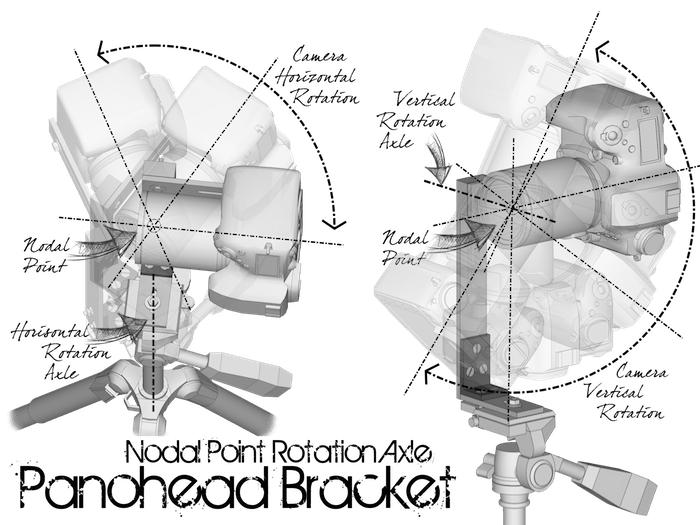
It developed based on better knowledge of nodal points and the “No-Parallax” position that could be found easily as a free source of knowledge at PanoTools.org Wiki, Beside of that, the Panohead V.02A already designed could be used for the various type or brands of cameras, lenses, and tripod just like the design of the commercial panoramic head.


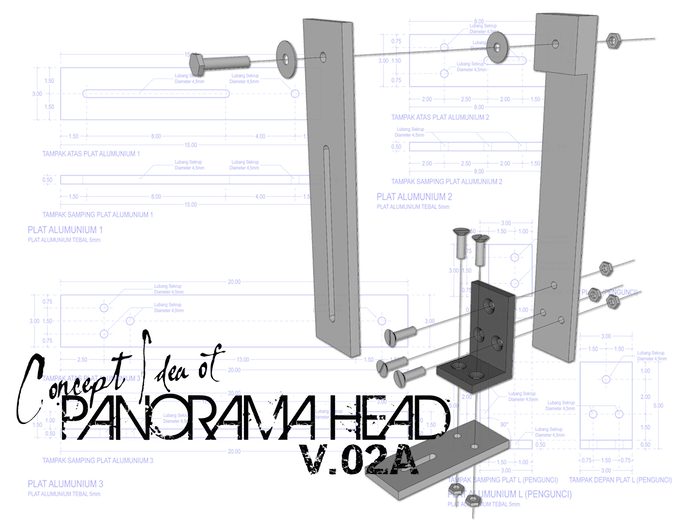
Overall, The Panohead V.02A was made with an Aluminium plate that has 3 mm in thickness and wide around 3 cm. It separated became 3 parts, part 1 is used as a nodal point horizontal adjustment plate, part 2 is used as a structural plate, and part 3 is used as camera mounting and nodal point adjustment based on camera and lens type.

Learn from the experiences of Panohead V.01 development, the adjustment mechanism, and how it works perfectly after being tested with Nikon D90 + 18-105mm lens and Canon EOS 60D + 18-55mm lens during the Jogja River Project.

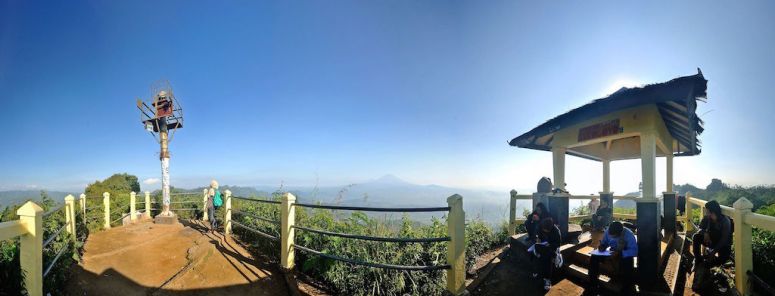
Some panorama pictures that were made with the Panohead V.02A

Schaffhausen - Switzerland
Schaffhausen – Switzerland
Suroloyo Peak - Kulon Progo
Suroloyo Peak – Kulon Progo
Wonosadi Sacred Forest - Gunungkidul
Wonosadi Sacred Forest – Gunungkidul

After the tool test with Nikon D90 + 18-105mm lens and Canon EOS 60D + 18-55mm lens, its needs to be repaired again with different materials or with different metal plate thickness. The note from the first test are:

  • the plate thickness was great, but when mounted on the tripod, the construction of the tool was a little bit shaking after being moved, particularly on the vertical structure plate. It’s might be happened because of the weight of the camera’s body and lens.
  • the circular point needs to repair or change with a different mechanism, which has grips to make it locked easier.

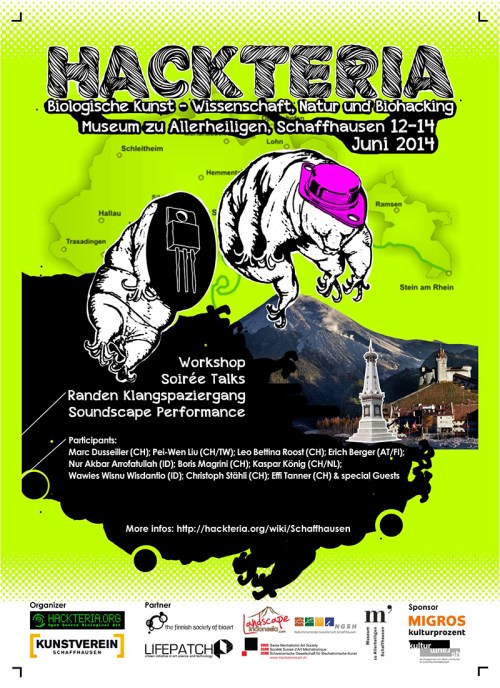
Hackteria: Biologische Kunst – Wissenschaft, Natur und Biohacking, Schaffhausen, Switzerland.

Interdisciplinary Community Gathering Talk And Presentation
(2014)
___________________________________________


Hackteria-Schaffhausen_Flyer_sm-1

Hackteria: Art Biology Science, Nature and Biohacking is a series of events organized by Marc Dusseiller and Hackteria International Community, in collaboration with Kunstverein Schaffhausen. All events are held in the Auditorium of Museum Zu Allerheiligen, Schaffhausen. Workshop and a series of panel discussions held for 3 days focusing on interdisciplinary activities of science and art

After five years since its inception, Hackteria | Open Source Biological Artis a global network that developed with the radical interdisciplinary approach emphasized on the ideas and methodologies in the field of BioArt, DIY biology‘, Appropriate Technology, Science Arts, and Bio-Hacking’. One focus of this project is hackteria.org, which is an online platform that provides a variety of information for artists, hackers/makers, researchers, and educators. In addition, through HackteriaLab 2010-2014, which is an event for 1-2 weeks is done regularly every year, participants from various countries meet and jointly perform a variety of collaborative practice through new projects as a medium to share knowledge through workshops and presentations. In the event which was held for 3 days in Schaffhausen Switzerland, divided into sections that everything is an explanation of the movement and the history of DIY and Open Hardware through discussions and hardware hacking activity.

“Wawies” Wisnu Wisdantio became this event participant on the behalf of Lifepatch member and also represent The Landscape Indonesia website. During one of the event phase called as “Hackteria Soirée: Nature, Art & Science”, which was a discussion on Bio Art, Biohacking and interdisciplinary, Wawies presenting an overview of the collaborations of Life Patch with Hackteria, BioDesign.cc and other partners in the JRP – Jogja River Project. In addition, he also talks about how amateur landscape photography could become tools for Landscape Indonesia” to share information about travel and environmental issues in an online platform website and produce the Free-Download E-photobook of Indonesia for Indonesians. Moreover, I’m just a little part of this event phase. Erich Berger (AT / FI) Finnish Society of Bioart, gives an insight Ars Bioarctica Residency program in Kilpisjärvi, Nord-Lappland, as well as various artistic commitment in relation to nuclear power in Finland, followed by the presentation of her latest book publication Field_Notes from Landscape to Laboratory – Maisemasta Laboratorion. Marc Dusseiller generally provides the project Hackteria | Open Source Biological Art before and gives an insight into HackteriaLab 2014 Yogyakarta, which he has co-organized this April in Indonesia. Boris Magrini (CH), an art historian, is making an attempt at the various topics presented, as well as the Bio Art in general, to summarise his view, as well as to position activism between contemporary art and Neomodernism. The audience is then invited to an open discussion moderated by Leo Bettina Roost and Boris Magrini.

The Presentation Material


Besides presentation and discussion, the other participants were also contributory to the success of this event series through experiment activities on field and laboratory to share their achievement in knowledge exploration. Some of the practical topics explored are the following:

Do-It-Yourself Microscope Workshop

“Make your own microscope webcam” workshop with Marc Dusseiller (CH) and Nur Akbar Arofatullah (ID)


Hackteria Listening Fields

Sound walk in Randen – Switzerland with Kaspar König (NL/CH), Pei-Wen Liu (TW/CH) and Christoph Stähli (CH)


Hackteria Natural Soundscapes

Experiment sound performance that inspired with the biological environment. The performance artist are Kaspar Konig – carte blanche, Pei-Wen Liu – The Philosophy of Constant Waiting (Chapter 7 Yogyakarta), Christoph Stähli – Noise and Nature, and collaboration of Marc Dusseiller with Yashas Shetty – Randen Listening Fieldscolaborasi

Referral sources for more detail information and documentation about the event:

Citizens Initiative On Environment Monitoring – unconference session presentation at the Camp Pixelache (Vartiosaari), Helsinki

Interdisciplinary Community Gathering Talk And Presentation
(2014)
___________________________________________


PA14_webflyer

Pixelache Helsinki (‘Pikseliähky’) is an electronic art and subculture festival that was being held in Helsinki since 2002. it has various programs, such as seminars, workshops, exhibitions, concerts and club events.

Since 2012, the festival themes have become quite diverse as well as the organizational of Pixelache. Pixelache Helsinki 2014 was an international 2-day trans-disciplinary event focusing on the theme of “The Commons”, including biocommons, urban culture, and the kinds of knowledge about The Commons.

Adding a new island to its logbook after Suomenlinna (2011) and Naissaar (2013), Camp Pixelache will take up residence on Vartiosaari, a nature island surrounded by eastern suburbs of Helsinki, during 6-8th June 2014.

I became a participant on Camp Pixelache 2014 on the behalf of Lifepatch member and also represent the Hackteria International Community to disseminate the HackteriaLab 2014 – Yogyakarta event that was held on April 15 – 30, 2014. In the unconference session presentation at the Camp Pixelache, I get a chance to present the research, mapping, and monitoring of the river in the JRP – Jogja River Project. Moreover, the presentation itself also contains the dissemination of the HackteriaLab 2014 – Yogyakarta event.

The Presentation Material
Became contributor at Camp Pixelache 2014: Remix the Commons video-mix

Remix the Commons is a collaborative and evolutive multimedia project. It aims at documenting and illustrating key ideas and practices of the commons movement, including the creative process of the project itself. During Camp Pixelache 2014 in June on Vartiosaari, Alain Ambrosi & Frédéric Sultan from Remix the Commons platform worked together with M-Cult,‘s Maria Candia and Kalle Kuisma to make recorded interviews & conversations with the Camp participants about how they defined the Commons, and about the gathering that was taking place.

Vartiosaari_2
Alain Ambrosi and his team from Remix The Commons documenting people sharing what the commons means to/for them, in their own language. Videos will be part of Define the commons project. http://www.remixthecommons.org – Description and Photo by Ong Jo-lene


Related articles and Reference:

Prologue Serial Perjalanan ke Finland & Switzerland – Singapore Transit

Dari Sudut Nordic Countries Hingga Konfederasi Switzerland – Prologue

Mesin jet ganda di sayap Airbus 320-200 hanya membutuhkan sekitar dua jam lebih untuk menembus jarak sejauh 1.242 km dari Yogyakarta. Jarum-jarum jam di tanganku masih menunjukan pukul 9:40 ketika kaki mulai menapaki lantai salah satu apron Changi Airport. Continue reading “Prologue Serial Perjalanan ke Finland & Switzerland – Singapore Transit”

How to make DIY: E-Photobook – A Sharing event

Public Talk And Presentation Of Do-It-Yourself E-Photobook
(2014)
___________________________________________


LI DAN AJI 2012 02 07 - 01

E-book or digital book has already become very famous as an open source media to spread ideas freely. The internet connection is one of many opportunities to make the ideas spreading more easier. All we need are just our ideas, computer as the main tool, and skills to make it happens.

Landscape Indonesia itself already use E-Photobook as a medium to share its activities, travel journal, and abundant of the Indonesian landscape picture, as creative works that somehow want to make its readers know more about Indonesia and how the lovely of their country.

However, how is the creative process happen? How far or how deep a person could explore and make a creative activity through this media? How are the maker steps to make his works still objective meanwhile the mission itself have persuasive content? and how are the steps to publish and distribute it?

Through a collaboration event between Forum NGI Regional Yogyakarta and Landscape Indonesia, they make a sharing event that talking about “DIY (Do It Yourself): E-Photobook”.  The event itself occurred on 7 February 2014 at the office of Aliansi Jurnalis Independen (AJI) Yogyakarta.

Review Sharing DIY:E-Photobook, 7 Februari 2014
Writer: Ngaliman (freelance Jurnalis)
This review are in Indonesian Language and Had been published in as article at Forum NGI Regional Yogyakarta

(1) Travel Jurnal Oleh Wawies Wisnu 


Melakukan perjalanan dan sekedar jalan-jalan nampaknya akan biasa saja jika tidak ada dokumentasi tulisan, foto bahkan tak ada cerita yang dibagikan, setidaknya hal itulah yang membuat Wawies Wisnu ingin membagikan kisah perjalananya dalam bentuk Travel Jurnal. Selain hobi jalan-jalan dia juga seorang arsitek yang gemar dengan dunia literasi.

Membaca dan menulis kan cerita perjalanan adalah cara dia berbagi melalaui Travel Jurnal. Editor Landscape Indonesia yang berdomisili di Yogyakarta ini selalu meluangkan waktu untuk berbagi ceritanya dalam bentuk tulisan perjalanan.

Sebenarnya budaya menulis perjalanan sudah ada sejak jaman ketika aksara ditemukan,sebut saja kisah-kisah leluhur yang ditulis para Empu, dalam bentuk syair,atau para orang pintar yang sedang menacari wawasan baru, dan menurut dia mengapa bukan kita? Niat adalah hal pertama kemudian ngumpulin modal, riset dan lakukan perjalanan, catat apa saja yang didapat dan edit tulisan kemudian publikasikan tulisan perjalanan kita itu di blog pribadi, media sosial atau dalam bentuk buku jika memungkinkan. paling penting adalah bersenang-senang dengan perjalanan kita.

Bahkan sekedar niat yang terencana tapi tidak mau melakukanya akan sia-sia rencana perjalanan kita, maka Nekad bisa jadi pemicu agar rencana terlaksana, nekad juga bukan harus tidak dipersiapakan segala hal yang dibutuhkan,tetap persiapkan beragam kebutuhan yang diperlukan dalam perjalanan. Perlengkapan disini adalah hal yang kita butuhkan tak perlu yang mahal, atau yang repot kita bawa, paling penting adalah peralatan yang mudah dan murah pokoknya nyaman kita bawa.

Modal atau biaya akomodasi masih menjadi bagian yang penting dan bagi sebagian orang biaya adalah hal yang membuat berpikir dua tiga kali jika ingin melakukan perjalanan, makanya ngumpulin modal adalah cara tepat, dengan jauh-jauh hari merencanakan perjalanan kemudian menabung sesuai anggaran yang kita butuhkan buat perjalanan.

Rencana perjalanan sudah terencana, biaya sudah dianggarkan dan disiapkan, perlengkapan sudah ada, maka segeralah mulai melakukan perjalanan,tetapi alangkah baiknya cari informasi tentang destinasi tujuan perjalanan, Riset kecil-kecilan nampaknya perlu dilakukan,
 Riset ini bisa menerapkan teori 5W+1H; pertama Tentukan tujuanya, kedua carilah informasi formal dan nonformal seputar destinasi tujuan perjalanan, cari informasi di dunia maya dan baca buku juga bisa menambah wawasan kita,Ketiga Catat dan tulis semua hal yang dirasakan atau ditemui, moment-moment unik yang terjadi. 5W+1H disini menurut Wawies Wisnu perlu ditambahin menjadi 5W+1H+S; What,who,when,why,where, how dan Sensasi. Kenapa sensasi nampaknya Wawies Wisnu ingin menjelaskan bahwa setiap perjalanan memang harus dinikmati, dan sensasi setiap pejalan berbeda walau destinasinya sama.Cinderamata, tiket kereta, tiket masuk tempat wisata, foto, atau benda-benda yang mendukung cerita perjalanan kita bisa di jadikan bahan tambahan yang menjadikan cerita perjalan lebih menarik.

Travel Jurnal adalah memorabilia yang menjadikan kenangan buat pejalan, cerita itu bisa disimpan dan dibagikan,ketika cerita dibagikan maka buatlah konsep dan bentuk yang bisa dinikmati juga oleh orang lain,sebuah scrapbook juga bisa dijadikan wadah membagikan cerita perjalan. blog pribadi, e-book bahkan buku cetak juga bisa dijadikan dokumentasi cerita perjalanan kita.

Dampak dari cerita perjalanan juga memiliki kelemahan dan kekuatan. Bahkan kisah inspiratif dari cerita yang kita sampaikan bisa berdampak bumerang,racun jalan-jalan dengan destinasi yang eksotis, petualangan yang menantang dan menga-syikan akan membuat siapapun tertarik dan ingin melakukan perajalanan. Namun disisi lain demam jalan-jalan, menjamurnya turis,eksploitasi lingkungan berlebih untuk industri pariwisata menjadikan destinasi perjalanan tereksploitasi.
Maka sebagai pejalan ketika menuliskan setiap unsur dan elemen porsi dan kekuatan yang sama sesuai tujuan dan misi artikel, setidaknya dampak positif dan negatif terhadap lingkungan harus dipahami pejalan.

Materi presentasi oleh Wisnu Wisdantio

(2) E-Photobook Oleh Kang Wahyu Widhi


Membuat catatan perjalanan dan dokumentasi foto menjadi sebuah buku? Kenapa tidak? Era digital memungkinkan kita untuk membuatnya demikanlah hal yang membuka peluang berkarya bisa lebih mudah dan murah. Dengan perkembangan era digital yang semakin maju sebuah buku tidak hanya sekedar dicetak dan dipublikasikan secara fisik. Dengan adanya blog, jejaring social, e-book, bahkan e-Photobook bisa kita buat dan distribusikan secara mudah dan murah.
Wahyu Widhi dari Landscape Indonesia kali ini menyampaikan materi yang pernah di sampaikan di FRAME (Fotokita Sharing Moment) Jakarta dan Sharing DIY:E-Photobook Solo. Dan di Yogyakarta Dia ingin berbagi materi tersebut dengan tambahan materi dari Wawies Wisnu di awal tentang Travel Jurnal, jadi kali ini memang dalam acara Sharing DIY:E-Photobook Forum NGI Regional Yogyakarta mendapatkan materi bonus dari Landscape Indonesia.

Kenapa dan bagaimana E-Photobook itu? Yang jelas dengan E-Photobook kita bisa membaca dan membagikan karya kita tanpa harus mencetak secara fisik sebuah buku. Karena ini buku elektronik yang memungkinkan dibaca dan dibawa kemana saja dimana saja, bisa di Smartphone, Handphone, Tablet, Laptop, Komputer atau perangkat digital lainya yang mendukung. Jadi lebih hemat bawaan dan tidak harus membawa buku fisik kemana-mana, cukup simpan filenya di perangkat kita.

E-Photobook ini juga bisa dijadikan Portofolio, Album Kenangan dan sharing pengalaman. Jadi kenapa tidak kita buat? Maka pertanyaan penting dari kang Wahyu Widhi adalah “Kenapa banyak buku bagus mengenai keindahan Indonesia dibuat oleh orang luar negeri?” hemm.. pertanyaan itu yang kemudian oleh Dia menjadi pemicu ketika LandscapeIndonesia.com ada dengan slogan “Meracuni..eh..menginspirasi betapa indahnya Indonesia ini”. Tapi karena membuat buku dan mencetaknya cukup menguras biaya, maka solusi yang ditawarkan LandscapeIndonesia.com adalah digitalisasi dalam bentuk E-Photobook dengan format PDF maka buku digital bisa dibawa dan dibaca siapa saja dimana saja dengan segala latarbelakangnya.

Pembuatanya juga tidak sulit, tetapi tetap tidak boleh dengan asal, karena ada proses bertahap walau tetap ide kreatif si pembuat buku digital bisa berkreasi dan mengekslorasi daya kreatifnya. Setidaknya ada beberapa tahapan pembuatan berikut ini;

1. Riset data
Penting disini dengan menerapka 5W+1H+F menurut kang Wahyu Widhia aka nada pertanyaan-pertanyaan yang mestinya bisa kita temukan solusinya agar ketika karya e-book atau e-photobook ini berhasil dibuat akan jelas bentuk,tujuan,konten dan macam ragamnya sesuai apa yang sudah direncanakan atau ada dalam gambaran kita. Setidaknya pertanya dibawah ini membantu kita dalam riset;

  • Apa tujuan kita membuat e-book atau e-photobook ini?
  • Siapa target pembaca e-book kita ini?
  • Formatnya bagaimana?
  • Bagaimana memmbuatnya?
  • Bagaimana akan mengunggah e-booknya
  • Poin 5W+1H ditambah F adalah penting ketika membuat e-photobokk, kenapa ada “F” disini,? “F” ini adalah “Foto”. Kenapa mesti foto? Ya karena foto penting kaitanya untuk bahan cerita dari e-photobook yang akan kita buat. Selain F adalah Foto maka F juga Fun.

Riset ini juga mirip dengan yang diuraikan Kang Wawies ketika membuat Travel Jurnal, sumber literasi online dan offline sangat diperlukan untuk menguatkan data di lapangan.

2. Aktivitas/Travelling
Aktivitas disini adalah langkah selanjutnya setelah kita peroleh data penguat sebelum melakukan aktivitas. Jalan-jalan begitulah kiranya. Dalam melakukan perjalanan kita harus rajin atau hal-hal unik kita coba gali. Langkahnya bisa dengan seperti berikut;

  • Mencari data; data apa saja yang kita perlukan
  • Backup data; usahakan data yang kita peroleh aman, contoh dokumentasi foto.
  • Dan yang terpenting ketika melakukan perjalanan maka “Enjoy Your Trip”

3. Olah data
Mengumpulkan foto dokumentasi selama perjalanan, memilih foto yang nantinya akan di jadikan bahan pembuatan e-photobook, edit foto-foto sesuai keperluan dan jangan lupa backup buat menjaga tetap aman file foto kita.

4. Produksi
Setelah data foto atau tulisan terkumpul maka mari berkarya. Kenapa ada tulisan juga? Karena tulisan atau catatan perjalanan seperti materi yang disampaikan kang Wawies akan lebih menarik juga sajikan dengan foto, komposisi foto dan tulisan tergantung kita, bisa banyak tulisan dengan selingan foto, atau foto banyak dengan tulisan-tulisan. Yang jelas pembaca yang kita targetkan atau segmen pembaca yang kita sudah tau akan mempermudah bagaimana kita membuatnya.  Yang dengan foto orang akan tertarik, banyak orang yang sudah tau cerita ketika melihat gambar, tapi bukan berarti tidak perlu tulisan. Oke bagaimana membuat e-photobook ini?

  • Software pendukung ; Photoshp, Indesign,Illustrator, Corel Draw, Lightroom, Powerpoint, MS Word atau software lain yang kita bisa atau teman kita bisa.
  • Aplikasi Mobile di smartphone juga ada yang sudah bisa contoh pada smartphone Android ada; Photobook Creator, Photobook Picture Album, Scrap! Photobook Maker Free dan Tin Tint Photobook.

Ketika software sudah ada maka bersegeralah membuatnya, ketika kita tidak bisa, maka kenapa tidak teman yang bisa kita ajak berkreasi membantu kita, bagaimana kalau kita tidak bisa dan tidak ada teman? Hemmm… maka carilah teman dan perbanyak teman. Tapi lebih penting adalah kita belajar, toh ini wahana buat berkarya dan berbagi.

5. Distribusi
Setelah karya e-photobook atau e-book kita sudah jadi, terus mau diapakan? Ya mari dibagikan. Caranya mudah dan murah, karena tak perlu harus mencetaknya. Cukup kita bagikan di dunia maya dan pembaca kita kasih link dimana pembaca bisa membaca dan mengundu karya kita tersebut.
Saat ini banyak penyedia jasa di internet yang memudahkan kita. Bisa dibagkan di blog atau website pribadi, file server sharing seperti mediafire atau filesonic, bahkan ada free ebook website yang bisa kita manfaatkan untuk membagikan karya kita, seperti scribd.com dan isssu.com.

6. Promosi
Setelah karya kita sudah terdistribusi atau sudah terpajang maka bagaimana agar teman, saudara, orang tua dan pembaca yang lain bisa mengaksesnya? Lakukanlah promosi. Dan promosi ini juga mudah dan murah. Ada facebook, twitter, blog pribadi, email dan SEO atau yang lainya yang memungkinkan karya kita bisa dibagi ke siapa saja. Selain dengan cara online kita juga bisa berpromosi dengan cara offline. Dengan sharing, ngobrol, diskusi.

Sekiranya begitulah kiat dan pemaparan pembuatan e-photobook. MUDAH bukan? Dan jangan tidak dicoba bahkan di bagikan karya kita ya. Karena berbagi bisa menambah rezeki. Kang Wahyu Widhi yang gemar jalan-jalan juga member pengetahuan tentang kenapa jalan-jalan dan profesinya sebagai fotografer bisa membuat dia tetap bisa menikmati hidup. Karena salah satunya adalah jangan sungkan sharing dan tetap berkarya.

Materi presentasi oleh Wahyu Widhi

360-degree panorama pictures of Lifepatch: Jogja River Project [JRP]

Interdisciplinary collaboration of environment monitoring at Jogja River Project
(2013 – Present)
___________________________________________


Jogja River Project (JRP) is a serial interdisciplinary collaboration project between various communities in Yogyakarta. Sincerely, during the first project that was held in 2011, JRP was an exploration expedition on the Yogyakarta river bank that was wide open for everyone who was willing to join and open share all the data during the exploration.

My first contribution to this project was on the third exploration trip on the Gajahwong River, on 20 May 2012, when was joined as the representative from The Landscape Indonesia community. From that exploration itself, I made a travel journal photo story and published it as a short article on www.landscapeindonesia.com with the title “Menelusuri Sungai Gajahwong Yogyakarta dalam Jogja River Project #3” (Exploring the Yogyakarta Gajahwong river at Jogja River Project #3).

In 2013, the Jogja River Project developed as a bigger project with 4 main activities, such as the development of the Bio-Electronic Laboratorium at the house of Lifepatch, making serial workshops about water sampling and visual documentation of the river environment, research activities through documentation and water sampling of Code river, and collaboration activities with various communities in Yogyakarta on Gajahwong river. Besides that, JRP also becomes part of the Bio Design for the Real World program. A collaboration project between Lifepatch, various communities in Yogyakarta, Microbiology Department of  Gadjah Mada Yogyakarta University (UGM), EPFL Switzerland and Shrishti School of Art, Design, and Technology, India. The main idea of The Jogja River Project and The documentation of the Jogja River Project 2013 process itself had been described in very detail on Lifepatch Website.

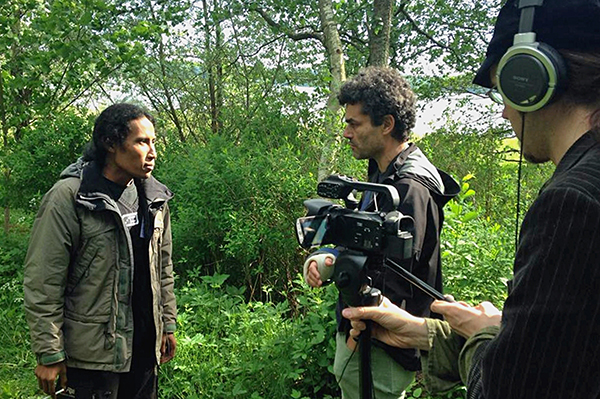
Within this big collaboration, I joined as a member of the visual documentation team and worked with Joan Prahara Bumi. In order to record The river environment condition as information that is easy to understand, we made a 360-degree panoramic picture of every water sampling location. To support the process, we made a small research to build a simple extension tool for our tripod, which is a homemade panoramic head that only costs approximately $1. Although still need enhancement, the tool itself that we called The DIY 360-Degree Panohead V.01 is already quite useful to support the process of environmental monitoring documentation.

The river environment condition documentation itself is conducted in about 20 locations that spread along the Code River, which are still in the administrative territory of Yogyakarta city.

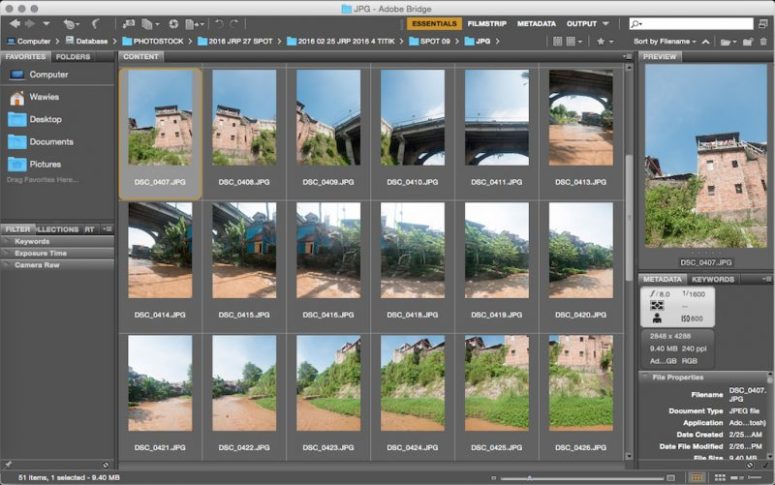
Moreover, within the process, we produced raw pictures as material usually about 45-50 pictures from each spot location. From this point, all of those pictures became part and stitched all together and made the 360-degree picture.

jrp_2016_360_proses_01
The serial photos as the environmental documentation in each location that was previewed with Adobe Photoshop CS6

Within the process of 360-degree panoramic picture-making, the documentation team also make a collaboration with Budi Prakosa, Lifepatch member who is a programmer. In his hand, all the material pictures stitch together with PTGui, a panoramic stitching software that originally developed as a Graphical User Interface for Panorama Tools.

After that, all the 360-degree panoramic photos combined with all the data of river monitoring became part of an interactive map of the Code River environmental monitoring. The map itself is made as an online platform database with free and open-source software (LGPL) for information collection, visualization, and interactive mapping that is developed by a non-profit software company called Ushahidi, Inc.

Map Interactive

mapslifepatch.org from lifepatch on Youtube.com, a video that was made by Adhari Donora about user interaction with the Lifepatch Jogja River Project map.

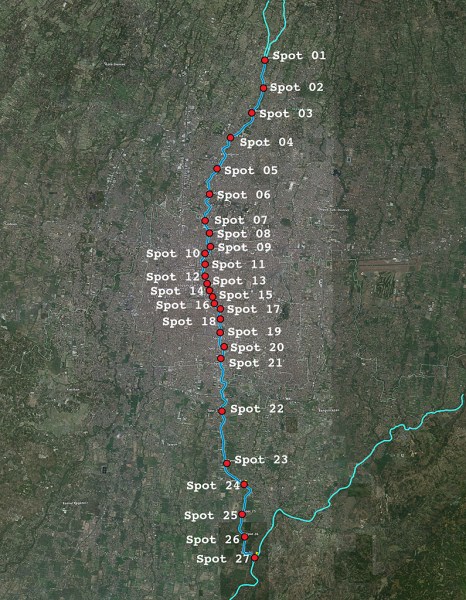
In 2014, the project continues until nowadays. Within the process of the Jogja River Project 2014, the location of the water sampling and documentation process increased became 27 locations, which is conducted to make better documentation and wider data.

jrp-2014-spot

Meanwhile, to support the documentation process with better equipment that is still cheap and affordable, we start to develop the second version of DIY Panohead that is based on information from free source knowledge at PanoTools.org Wiki. With the DIY Panohead V.02 that only costs about 20$, the 360-degree documentation process conducts again at the same spot. A review of the DIY Panohead V.02 design process itself is already documented on the 360-degree Panohead page.

The Lifepatch documentation of the Jogja River Project 2016 by Adhari Donora


Related Article:
-“Menelusuri Sungai Gajahwong Yogyakarta dalam Jogja River Project #3
– 360-degree Panohead design process

Published On Local Newspaper:
TEKNIK FOTOGRAFI: TANTANGAN SERU PANORAMA 360 DERAJAT“.
The article that published in a daily local newspaper called Harian Jogja and Solopos on August 27, 2015. The article was written by Gilang Jiwana [Redaksi@jibinews.co]

Reference and Link External:
– Detail and description of Jogja River Project – lifepatch.org
– Detail and description of Jogja River Project 2013 – lifepatch.org
– Bio Design for the Real World  – EPFL + (Art)ScienceBLR +Lifepatch

Workshop of Camera Anatomy and how it works

Community Workshop Of Camera Anatomy
(2013)
___________________________________________


Poster_Workshop_Pengenalan_Anatomi_dan_Cara_Kerja_Kamera

A small workshop about camera anatomy and how it works that was held with Lifepatch on 2 June 2013. This open and free charge workshop discussed the camera elements and how it works as a photography basic learning.

All the participant learning every part of the camera anatomy, such as cameras body and lens introduction. Also learn how to use ISO, shutter speed, and camera aperture to capture any visual information through photography.

Reference Site:

* details of workshop description on lifepatch.id


360 Degree Panohead V.01

Prototype of The DIY 360 Degree Panohead V.01 Photography Tools developed to support Lifepatch Jogja River Project (JRP)
(2013)
___________________________________________


The experiment of 360-degree Panorama Tripod Head or usually also called Panohead started in 2013 as a documentation method on a big collaboration environmental monitoring project called The Jogja River Project – 2013.

The idea of documentation methods is to make an interactive picture of the river’s environmental condition in a 360-degree view to make the river condition easier to understand. Instead of buying the 360-degree Panohead tool that is very expensive and hard to find in a common camera store, Joan Prahara Bumi and I as the member of the visual documentation team try to develop our own Panohead as an extension tool to be mounted on the tripod head.

The very first autodidact attempt is just a super simple tool, which was designed with an aluminium plate 3 cm wide and 3 mm thick. This tool is used to adjust the camera in the “No-Parallax” position when attaching to the camera tripod, even though we doing it with super less knowledge about the “No-Parallax” position itself. This tool is made based on as far as we know that the nodal point of the “No-Parallax” position is at the front lens centre, which was made ONLY for a 50mm lens with Nikon D80 and Nikon D90. Sincerely, the length between the Nodal point on the tripod circular axle and the camera’s body connector is about 10 cm.


The prototype, as a result, had little few changes to the aluminium width which became only 2 cm. Besides that, we made small changes by adding rubber to make the connection between the aluminium plate and the camera’s body more stiff and fit, which was also useful as the camera’s body protection from scratch that could happen because of metal friction.

Furthermore, although this prototype was very simple, it’s already been used to make a panorama picture as part of the Jogja River Project that was held during 2013 – 2014.

All of the pictures that were made with the first version of the 360-degree Panohead can be seen as part of the information on water monitoring interactive map of The Jogja River Project.

Map Interactive

Sincerely, this experiment begins with the lack of knowledge and false understanding about the mechanical movement to maintain the nodal point and decreased the treats of parallax condition. It all brought a lot of notes to develop a better tool for the next version.

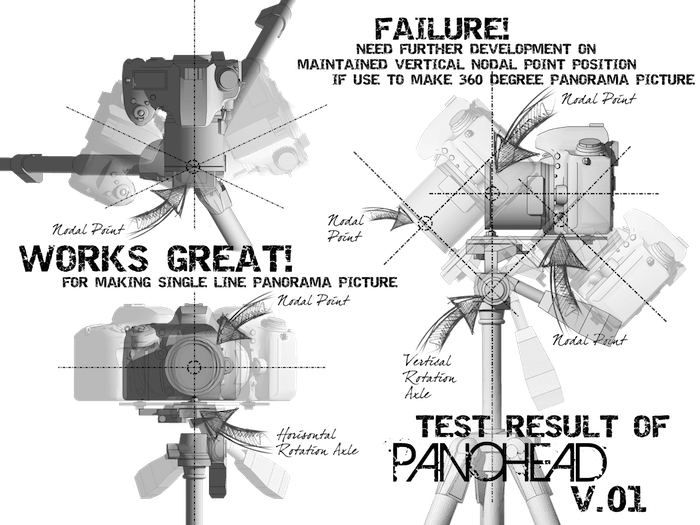
This version is working perfectly to maintain the nodal point only on horizontal movement, which is making a series of photos for panorama pictures in one line or a single row. However, it failed to maintain the nodal point when the process of making a bigger panorama picture, which had to make upper and under rows from the first row of the photo series. It happens because this V.01 prototype doesn’t have its own vertical rotation mechanism and depends on tripod vertical rotation, which was made each of the photo series in a single row has its own nodal point.

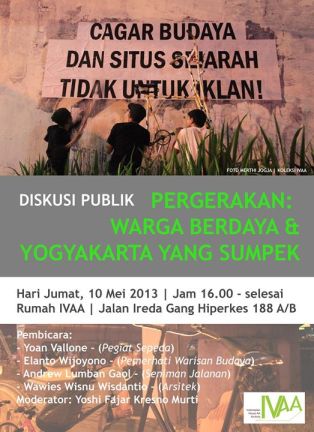
Public Discussion – Pergerakan: Warga Berdaya dan Yogyakarta yang sumpek

Public Discussion Of City Public Spaces Management
(2013)
___________________________________________


Poster Diskusi Publik

The focus of this discussion is the development and the rapid growth of the Yogyakarta city at the present time which has a major impact on the functional specialization of public space. Public Space Regulation and management became the starting point to maintain and develop the functional integration of the city’s public spaces.

It refers to the function of public space as the primary interaction connector between its citizen, which are also reflected in the culture of Yogyakarta city. The city regulation and management that neglect the function of the public space may lead restlessness of the people who really care about the development of their city.

This discussion talking about “Warga Berdaya” movements that were performed to criticise the government policies about regulation and management of public space in Yogyakarta. “Warga Berdaya” with various ways of direct actions in the public space demanded treatment and development of abandoned infrastructure.

Friday, May 10, 2013
Rumah IVAA (Indonesia Visual Art Archive) | Jalan IREDA, Gang Hiperkes 188 A / B
Panelist:
– Yoan Vallone – (Activists of Bicycle Community)
– Elanto Wijoyono – (Cultural Heritage Observer)
– Andrew Lumban Gaol – (Street Artist)
– Wawies Wisnu Wisdantio – (Architect)
Moderator: Yoshi Fajar Kresno Murti

Short version of video documentation on arsip IVAA

Full version of video documentation on arsip IVAA

https://www.youtube.com/watch?v=Ijniks1gB6E

Photo Documentation from other sources:

The Event on articles and news:
Tata Ruang Kota Jogja Bakal Dikritisi Seniman & Praktisi – Harian Jogja Online
Diskusi Publik – Pergerakan: Warga Berdaya Dan Yogyakarta Yang Sumpek (1) – Jogjanews.com
Diskusi Publik – Pergerakan: Warga Berdaya Dan Yogyakarta Yang Sumpek (2) – Jogjanews.com

Related Videos (no subtitles):
Serangan Umum Satu Maret, Rebut Ruang Kota Jogja! – youtube
Merthi Kutho #2: Serangan Umum Satu Maret – Rebut Ruang Kota Jogja –  arsip IVAA – youtube

Introduction of Basic Photography

Community Presentation And Workshop Of Basic Photography
(2013)
___________________________________________


Poster_fotografi_dasar

An introduction presentation about technique and composition on photography that could do with all cameras, such as a pocket camera, prosumer, and Digital Single Lens Reflection Camera.

This small presentation that was held with Lifepatch on 5 May 2013 is an open and free charge presentation, which is presented by me and Joan Prahara Bumi. It was discussed the camera elements and how it works as a photography basic learning. All the participant learning every part of the camera anatomy, such as cameras body and lens introduction. Also learn how to use ISO, shutter speed, and camera aperture to capture any visual information through photography.

Reference and Link External