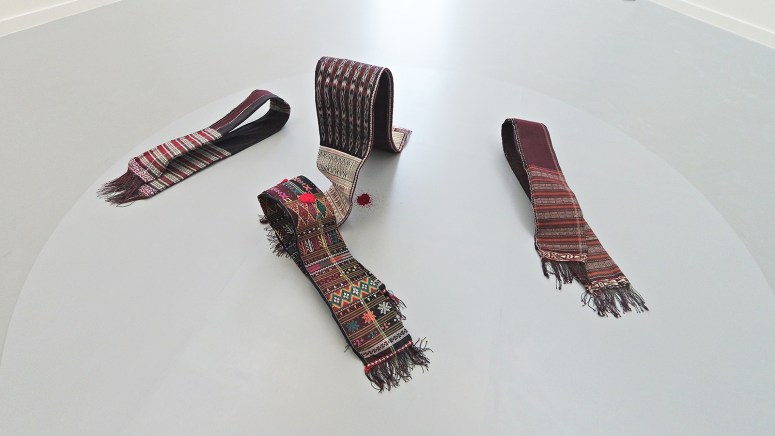
The Tale Of Tiger And Lion

An art exhibition design project exploring the fragments of Toba Land’s long historical narrations during the Tapanoeli War in the colonial era
(2017)
___________________________________________

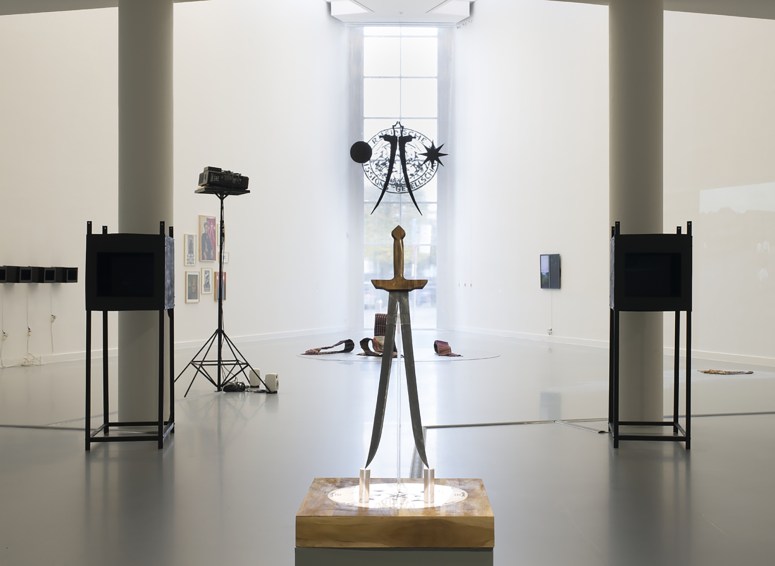
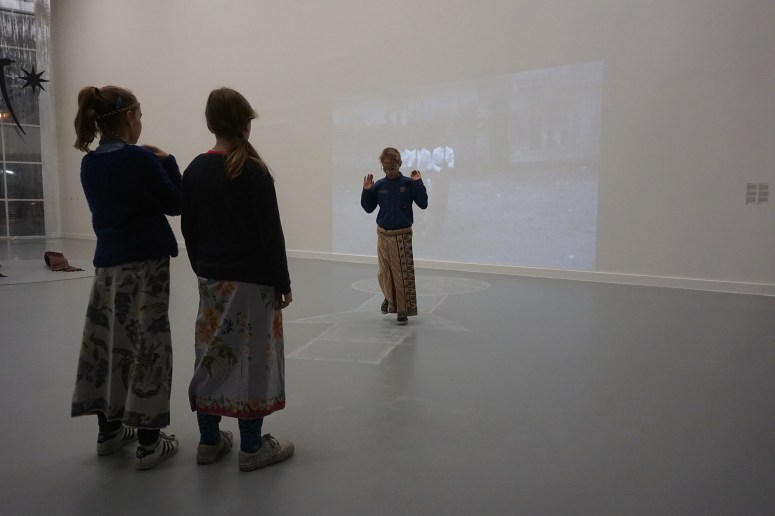
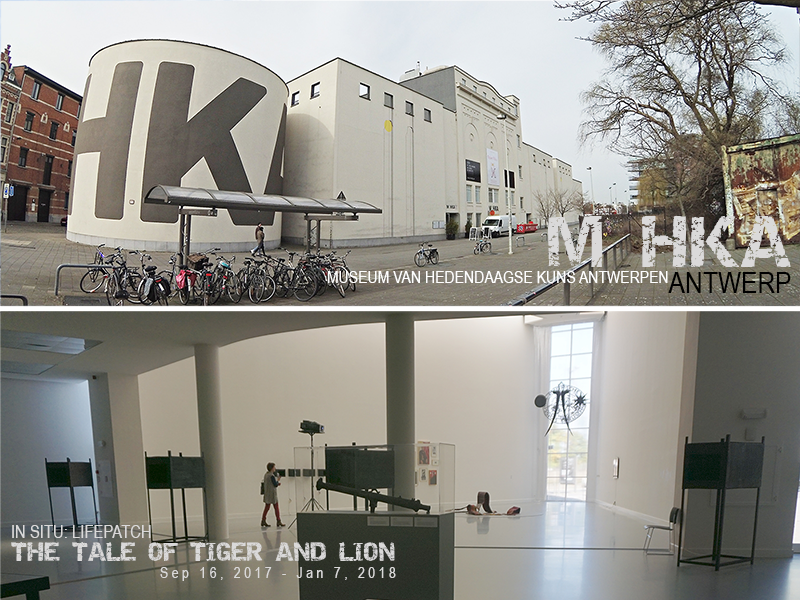
“The Tale Of Tiger And Lion” installation is the first art exhibition developed and designed as part of the Lifepatch project’s exhibition series, which was exhibited in two cities in Belgium. The first exhibition, titled “IN SITU: Lifepatch – The Tale Of Tiger And Lion”, was held in Museum van Hedendaagse Kunst Antwerpen (M HKA) from 16 September 2017 until 7 January 2018, curated by Nav Haq and Alia Swastika. The second exhibition, titled “Tano Toba Saga”, was presented as part of the “Power and other things: Indonesia & Art (1835-now)” within the framework of “Europalia Art Festival Indonesia – 2017”, curated by Charles Esche and Riksa Afiaty in Palais des Beaux-Arts (BOZAR), Brussels, from 18 October 2017 until 21 January 2018. Both exhibitions comprised several artworks and installations that depict the stories of two key figures and their relationships within a small fragment of North Sumatra’s long colonial history: the Swiss-Dutch soldier Hans Christoffel and the last king of the Toba people, Sisingamangaraja XII.
Both installation projects, “The Tale Of Tiger And Lion” and “The Tano Toba Saga”, began with an opportunity for Lifepatch to conduct brief research through various well-preserved Indonesian historical artefacts at the Museum Aan de Stroom (MAS) in Antwerp. The museum holds thousands of collections from the Nederlands Indisch colonisation era, including weapons, jewellery, heirlooms, flags, documents, and old photographs, many of which were granted from Hans Christoffel’s private collection. Those artefacts serve as silent witnesses to Christoffel’s military expeditions, effectively functioning as spoils of war and personal mementoes that he carried back to Europe following his years of service in the archipelago. From this vast archive, a selection was curated to present Sisingamangaraja XII and the Toba people’s resistance against the Dutch colonisation in North Sumatra, along with the narration about Hans Christoffel, who successfully ended the resistance during his service as an officer in the Koninklijk Nederlands Indisch Leger (KNIL). At the same time, we also had the opportunity to learn about both key figures through the artefact collection at Bronbeek Museum in Arnhem, which is the main KNIL archive to preserve their histories from the East Indies colonisation era.

Witnessing thousands of artefacts, including irreplaceable historical heirlooms that are directly related to Sisingamangaraja XII and the Toba People’s resistance, being stored and valued to construct or verify historical narrations far from their origins, brought Lifepatch to conduct further research in various places in North Sumatra, such as Medan, Balige, Bakkara, Parlilitan, Pangururan, and many more places. During the exploration, we realised that even though people in North Sumatra did not possess their rightful historical heirlooms and were oppressed culturally and politically by the colonial government, they still believed and preserved their histories through generations. Slightly different from the structure of Western historiography, which tends to be conveyed in a linear fashion and facts are generally collected based on written sources and the existence of historical objects as physical proof, the history and knowledge in Indonesia are produced and delivered orally and culturally through storytelling, theatre, song or even dance. Sifting through those scattered materials in North Sumatra, we begin to gather fragments of the stories based on the Toba people’s perspective about Sisingamangaraja XII, the people’s resistance against the Dutch, Hans Christoffel, the connection between colonialism and evangelism, as well as the myths that accompanied the Tapanoeli war stories.

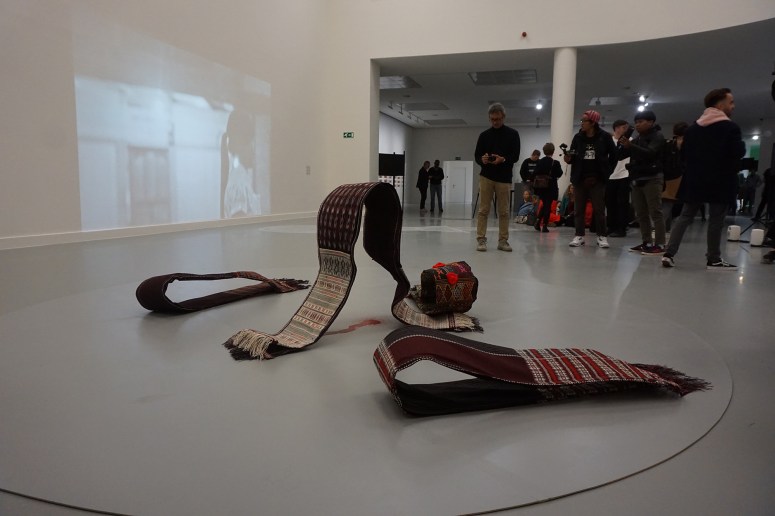
Working with these artefacts, materials, and narratives, there are tendencies for the histories often depicted and articulated in several versions based on ideological and political perspectives, as well as by personal identity. It appears that the “truth” is slightly different between the conflict “winners” version and the Toba people’s version. However, instead of trying to summarise the long history of colonialism in North Sumatra or compare each version to determine the most accurate one, Lifepatch presents the scattered historical fragments and their contrasting attributes to show the complexity of history. Furthermore, driven by its identity as a collective-based community with collaboration between its interdisciplinary members as the core of their work, “The Tale Of Tiger And Lion” is presented through the integration of historical artefacts on loan from the MAS Museum, several artwork installations, and archival material, unified by a major narration that connects all the exhibits. As part of Lifepatch, I was tasked with designing an exhibition layout that served as a physical manifestation of the narrative. At the same time, I also contribute to the exhibition by presenting Hans Christoffel’s ghostly memories through “The Lucid Memories” Installation.

Drowning in the stream of history, I find myself lost in a labyrinth of historical tales, struggling to understand the complexity hidden within those scattered fragments. Yet, despite appearing dispersed, often emerging in differing and contradictory versions, shattered by clashing ideologies and identities, there is a tendency that these scattered remnants of the past remain bound by a faint and tenuous thread that connects those pieces into a complex sequence of causality.

In ‘The Tale of Tiger and Lion,’ this blurry “benang merah” thread weaves various fragments into two major narrative arcs that are both intertwined and opposing. One arc gathers a cluster of historical fragments telling the story of Sisingamangaraja XII, the King and religious leader of the Toba People who lived in North Sumatra. On the opposite side, another narrative arc is composed of historical fragments centred on Hans Christoffel, a soldier who serves under the Koninklijk Nederlandsch-Indische Leger (Netherlands Royal Army) or KNIL, a military force that was established to protect the Dutch interests when expanding their colony’s territories and maintaining their colonial rule in the Dutch East Indies. Furthermore, the story began to get complicated in the early 19th century when the Dutch implemented policies of ‘unification and pacification’ to bring a conducive atmosphere for economic interest in the East Indische archipelago as their colonisation region. These policies drove a systematic expansion that sparked fierce resistance from the local community, forcing the Toba people to rise and fight under the leadership of Sisingamangaraja XII. Inevitably, as the resistance escalated, they collided with the KNIL forces—including a relentless officer named Hans Christoffel—in a massive conflict known as the Tapanuli War. After occurring for up to 29 years, the long-term struggle finally reached its conclusion with the death of Sisingamangaraja XII during his final guerrilla resistance.
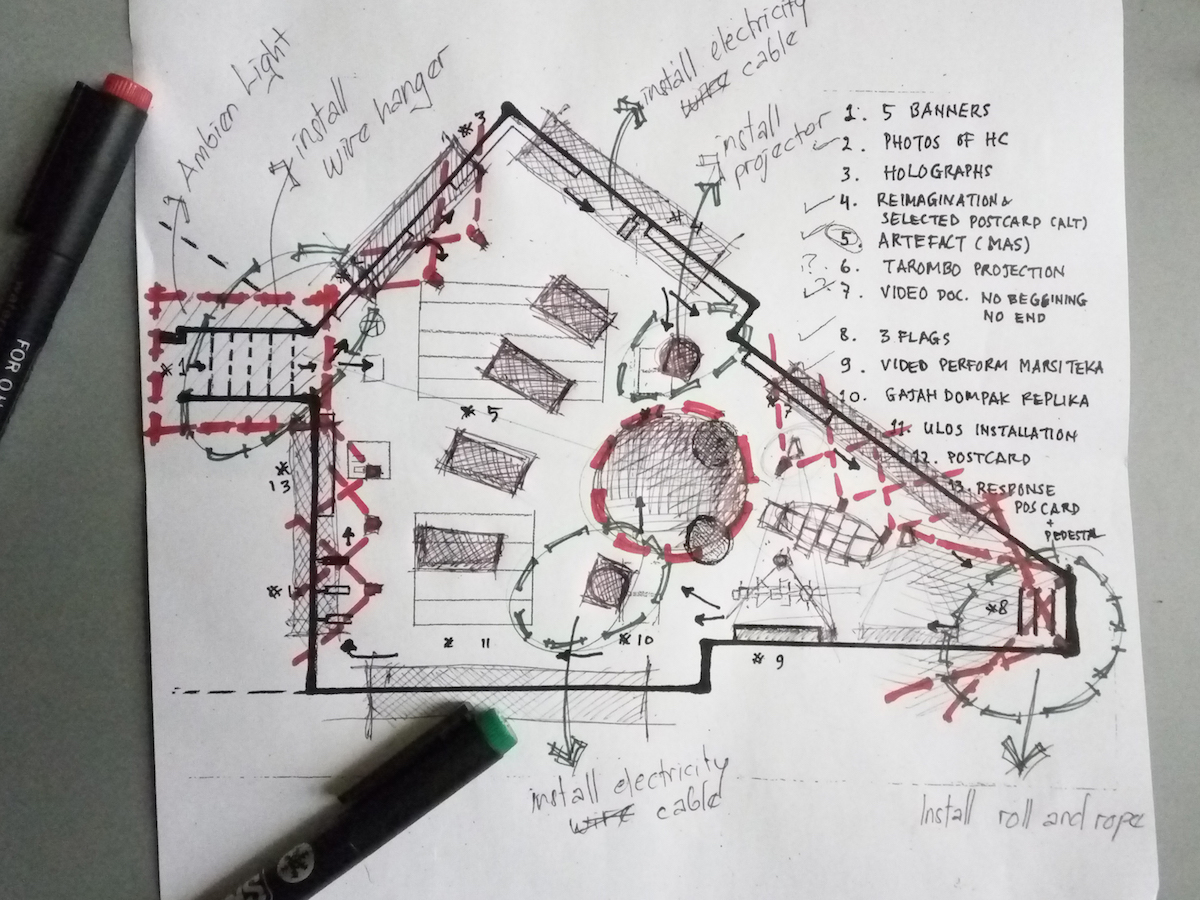
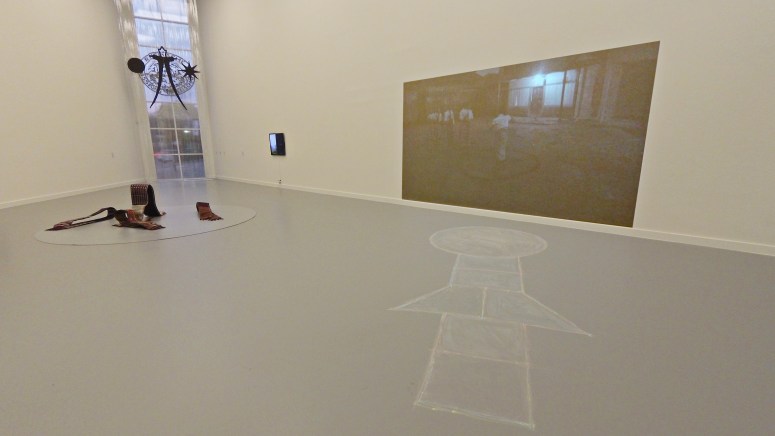
The experience gained from the ‘struggle’ of being lost in the labyrinth of historical fragments is what underlies the design of a structural blueprint for the exhibition layout. Instead of presenting a rigid linear chronological sequence, the complex causality is translated into a tangible spatial experience and reflected in the exhibition layout. The gallery space is envisioned not merely as a container for objects, but as a physical manifestation of the ‘blurry thread’ itself. The layout is designed to guide visitors sensorially and physically, allowing them to experience the same tension as the research process unravels each fragment of the complex narrative.

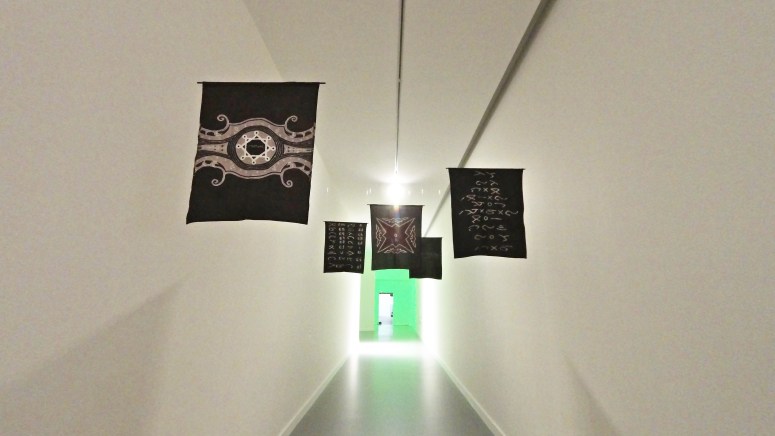
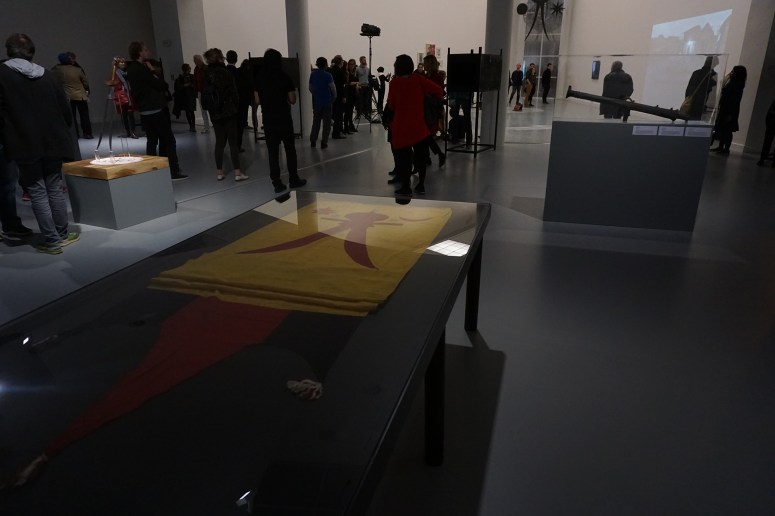
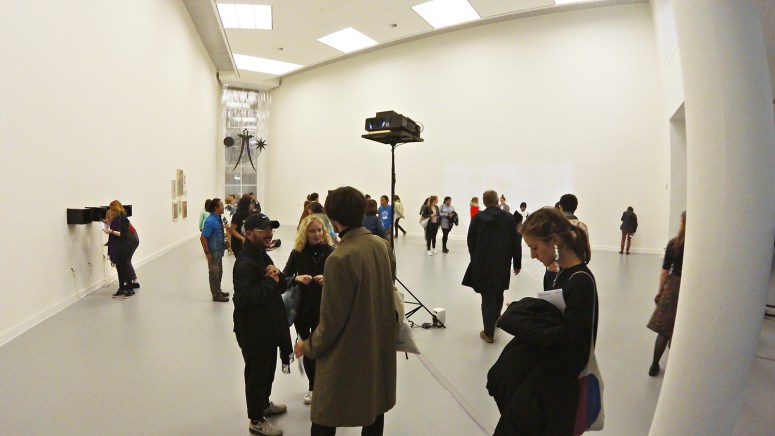
The exhibition layout is structured and designed to reflect a complex causal journey, translated into the spatial exhibition space by dividing it into two primary sections. The first section, beginning at the entrance, serves as a space where various narrative exhibition items are presented to tell the story fragments about Sisingamangaraja XII and the Toba people through historical artefacts, old photographs, and contemporary artworks. Moving further, almost to the end of the section, several artworks that hold the story of Hans Christoffel and the colonial machinery are laid out side-by-side but remain separate, as if forming two individual narrative arcs that occur within the same time span.
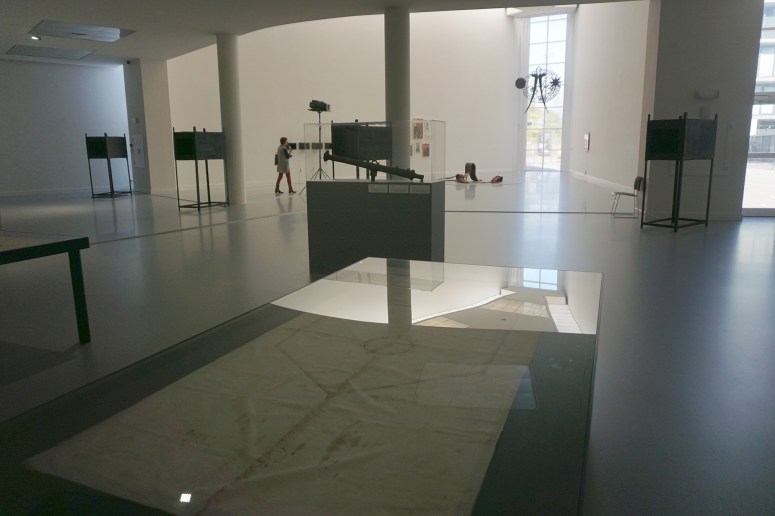
Moving deeper, the space slowly transforms into the next section, the main conflict area. Following the narrowing architecture shape of the gallery space, this zone is designed to depict the escalation of the stories established in the preceding sections. Several artworks from the Lifepatch members’ exploration are arranged side by side and intertwined, presenting the visceral moment where the two opposing historical arcs finally collide within the Tapanuli War. This serves as the critical intersection where characters and stories inevitably meet, dismantle one another, and ultimately forge a new narrative that persists to this day.
 

Reference Site:
* Details of “IN SITU: Lifepatch – The Tale of Tiger and Lion” exhibition on M HKA ensembles official website
* Details of The Tale of Tiger and Lion Exhibition on Meer Magazine official website.

Related Articles On Lifepatch Official Website:
* Detail of the first residency program of Lifepacth within the Europalia Art Festival 2017
* Detail of notes of Lifepatch research about Si Singamangaraja XII and other main figures that related to the Tapanoeli war 1907
* Detail of the second residency program of Lifepacth within the Europalia Art Festival 2017
* Detail of Lifepatch participation on the Europalia Art Festival 2017 Exhibition

Basic Travel Writing – Sharing With “Backpacker Dunia Jogja Jateng” Community

Community Gathering And Presentation Of Travel Writing
(2014)
___________________________________________


On the regular gathering of “Backpacker Dunia Jogja – Jateng” Community that was held in ACP Fruit and Coffee at 28 of June, I had a chance to make a small introduction about basic travel writing that I had been done with www.landscapeindonesia.com.

Within the sharing event, I talk about the basic definition of a travel journal, the easiest strategy to make small travel journal, research process during the trip, how to wrap all the experiences through travel journal, and then sharing it all in various methods such as made it as an e-book or small articles on an open-source articles website.

The presentation material


Referral sources for more detail information about the event:

How to make DIY: E-Photobook – A Sharing event

Public Talk And Presentation Of Do-It-Yourself E-Photobook
(2014)
___________________________________________


LI DAN AJI 2012 02 07 - 01

E-book or digital book has already become very famous as an open source media to spread ideas freely. The internet connection is one of many opportunities to make the ideas spreading more easier. All we need are just our ideas, computer as the main tool, and skills to make it happens.

Landscape Indonesia itself already use E-Photobook as a medium to share its activities, travel journal, and abundant of the Indonesian landscape picture, as creative works that somehow want to make its readers know more about Indonesia and how the lovely of their country.

However, how is the creative process happen? How far or how deep a person could explore and make a creative activity through this media? How are the maker steps to make his works still objective meanwhile the mission itself have persuasive content? and how are the steps to publish and distribute it?

Through a collaboration event between Forum NGI Regional Yogyakarta and Landscape Indonesia, they make a sharing event that talking about “DIY (Do It Yourself): E-Photobook”.  The event itself occurred on 7 February 2014 at the office of Aliansi Jurnalis Independen (AJI) Yogyakarta.

Review Sharing DIY:E-Photobook, 7 Februari 2014
Writer: Ngaliman (freelance Jurnalis)
This review are in Indonesian Language and Had been published in as article at Forum NGI Regional Yogyakarta

(1) Travel Jurnal Oleh Wawies Wisnu 


Melakukan perjalanan dan sekedar jalan-jalan nampaknya akan biasa saja jika tidak ada dokumentasi tulisan, foto bahkan tak ada cerita yang dibagikan, setidaknya hal itulah yang membuat Wawies Wisnu ingin membagikan kisah perjalananya dalam bentuk Travel Jurnal. Selain hobi jalan-jalan dia juga seorang arsitek yang gemar dengan dunia literasi.

Membaca dan menulis kan cerita perjalanan adalah cara dia berbagi melalaui Travel Jurnal. Editor Landscape Indonesia yang berdomisili di Yogyakarta ini selalu meluangkan waktu untuk berbagi ceritanya dalam bentuk tulisan perjalanan.

Sebenarnya budaya menulis perjalanan sudah ada sejak jaman ketika aksara ditemukan,sebut saja kisah-kisah leluhur yang ditulis para Empu, dalam bentuk syair,atau para orang pintar yang sedang menacari wawasan baru, dan menurut dia mengapa bukan kita? Niat adalah hal pertama kemudian ngumpulin modal, riset dan lakukan perjalanan, catat apa saja yang didapat dan edit tulisan kemudian publikasikan tulisan perjalanan kita itu di blog pribadi, media sosial atau dalam bentuk buku jika memungkinkan. paling penting adalah bersenang-senang dengan perjalanan kita.

Bahkan sekedar niat yang terencana tapi tidak mau melakukanya akan sia-sia rencana perjalanan kita, maka Nekad bisa jadi pemicu agar rencana terlaksana, nekad juga bukan harus tidak dipersiapakan segala hal yang dibutuhkan,tetap persiapkan beragam kebutuhan yang diperlukan dalam perjalanan. Perlengkapan disini adalah hal yang kita butuhkan tak perlu yang mahal, atau yang repot kita bawa, paling penting adalah peralatan yang mudah dan murah pokoknya nyaman kita bawa.

Modal atau biaya akomodasi masih menjadi bagian yang penting dan bagi sebagian orang biaya adalah hal yang membuat berpikir dua tiga kali jika ingin melakukan perjalanan, makanya ngumpulin modal adalah cara tepat, dengan jauh-jauh hari merencanakan perjalanan kemudian menabung sesuai anggaran yang kita butuhkan buat perjalanan.

Rencana perjalanan sudah terencana, biaya sudah dianggarkan dan disiapkan, perlengkapan sudah ada, maka segeralah mulai melakukan perjalanan,tetapi alangkah baiknya cari informasi tentang destinasi tujuan perjalanan, Riset kecil-kecilan nampaknya perlu dilakukan,
 Riset ini bisa menerapkan teori 5W+1H; pertama Tentukan tujuanya, kedua carilah informasi formal dan nonformal seputar destinasi tujuan perjalanan, cari informasi di dunia maya dan baca buku juga bisa menambah wawasan kita,Ketiga Catat dan tulis semua hal yang dirasakan atau ditemui, moment-moment unik yang terjadi. 5W+1H disini menurut Wawies Wisnu perlu ditambahin menjadi 5W+1H+S; What,who,when,why,where, how dan Sensasi. Kenapa sensasi nampaknya Wawies Wisnu ingin menjelaskan bahwa setiap perjalanan memang harus dinikmati, dan sensasi setiap pejalan berbeda walau destinasinya sama.Cinderamata, tiket kereta, tiket masuk tempat wisata, foto, atau benda-benda yang mendukung cerita perjalanan kita bisa di jadikan bahan tambahan yang menjadikan cerita perjalan lebih menarik.

Travel Jurnal adalah memorabilia yang menjadikan kenangan buat pejalan, cerita itu bisa disimpan dan dibagikan,ketika cerita dibagikan maka buatlah konsep dan bentuk yang bisa dinikmati juga oleh orang lain,sebuah scrapbook juga bisa dijadikan wadah membagikan cerita perjalan. blog pribadi, e-book bahkan buku cetak juga bisa dijadikan dokumentasi cerita perjalanan kita.

Dampak dari cerita perjalanan juga memiliki kelemahan dan kekuatan. Bahkan kisah inspiratif dari cerita yang kita sampaikan bisa berdampak bumerang,racun jalan-jalan dengan destinasi yang eksotis, petualangan yang menantang dan menga-syikan akan membuat siapapun tertarik dan ingin melakukan perajalanan. Namun disisi lain demam jalan-jalan, menjamurnya turis,eksploitasi lingkungan berlebih untuk industri pariwisata menjadikan destinasi perjalanan tereksploitasi.
Maka sebagai pejalan ketika menuliskan setiap unsur dan elemen porsi dan kekuatan yang sama sesuai tujuan dan misi artikel, setidaknya dampak positif dan negatif terhadap lingkungan harus dipahami pejalan.

Materi presentasi oleh Wisnu Wisdantio

(2) E-Photobook Oleh Kang Wahyu Widhi


Membuat catatan perjalanan dan dokumentasi foto menjadi sebuah buku? Kenapa tidak? Era digital memungkinkan kita untuk membuatnya demikanlah hal yang membuka peluang berkarya bisa lebih mudah dan murah. Dengan perkembangan era digital yang semakin maju sebuah buku tidak hanya sekedar dicetak dan dipublikasikan secara fisik. Dengan adanya blog, jejaring social, e-book, bahkan e-Photobook bisa kita buat dan distribusikan secara mudah dan murah.
Wahyu Widhi dari Landscape Indonesia kali ini menyampaikan materi yang pernah di sampaikan di FRAME (Fotokita Sharing Moment) Jakarta dan Sharing DIY:E-Photobook Solo. Dan di Yogyakarta Dia ingin berbagi materi tersebut dengan tambahan materi dari Wawies Wisnu di awal tentang Travel Jurnal, jadi kali ini memang dalam acara Sharing DIY:E-Photobook Forum NGI Regional Yogyakarta mendapatkan materi bonus dari Landscape Indonesia.

Kenapa dan bagaimana E-Photobook itu? Yang jelas dengan E-Photobook kita bisa membaca dan membagikan karya kita tanpa harus mencetak secara fisik sebuah buku. Karena ini buku elektronik yang memungkinkan dibaca dan dibawa kemana saja dimana saja, bisa di Smartphone, Handphone, Tablet, Laptop, Komputer atau perangkat digital lainya yang mendukung. Jadi lebih hemat bawaan dan tidak harus membawa buku fisik kemana-mana, cukup simpan filenya di perangkat kita.

E-Photobook ini juga bisa dijadikan Portofolio, Album Kenangan dan sharing pengalaman. Jadi kenapa tidak kita buat? Maka pertanyaan penting dari kang Wahyu Widhi adalah “Kenapa banyak buku bagus mengenai keindahan Indonesia dibuat oleh orang luar negeri?” hemm.. pertanyaan itu yang kemudian oleh Dia menjadi pemicu ketika LandscapeIndonesia.com ada dengan slogan “Meracuni..eh..menginspirasi betapa indahnya Indonesia ini”. Tapi karena membuat buku dan mencetaknya cukup menguras biaya, maka solusi yang ditawarkan LandscapeIndonesia.com adalah digitalisasi dalam bentuk E-Photobook dengan format PDF maka buku digital bisa dibawa dan dibaca siapa saja dimana saja dengan segala latarbelakangnya.

Pembuatanya juga tidak sulit, tetapi tetap tidak boleh dengan asal, karena ada proses bertahap walau tetap ide kreatif si pembuat buku digital bisa berkreasi dan mengekslorasi daya kreatifnya. Setidaknya ada beberapa tahapan pembuatan berikut ini;

1. Riset data
Penting disini dengan menerapka 5W+1H+F menurut kang Wahyu Widhia aka nada pertanyaan-pertanyaan yang mestinya bisa kita temukan solusinya agar ketika karya e-book atau e-photobook ini berhasil dibuat akan jelas bentuk,tujuan,konten dan macam ragamnya sesuai apa yang sudah direncanakan atau ada dalam gambaran kita. Setidaknya pertanya dibawah ini membantu kita dalam riset;

  • Apa tujuan kita membuat e-book atau e-photobook ini?
  • Siapa target pembaca e-book kita ini?
  • Formatnya bagaimana?
  • Bagaimana memmbuatnya?
  • Bagaimana akan mengunggah e-booknya
  • Poin 5W+1H ditambah F adalah penting ketika membuat e-photobokk, kenapa ada “F” disini,? “F” ini adalah “Foto”. Kenapa mesti foto? Ya karena foto penting kaitanya untuk bahan cerita dari e-photobook yang akan kita buat. Selain F adalah Foto maka F juga Fun.

Riset ini juga mirip dengan yang diuraikan Kang Wawies ketika membuat Travel Jurnal, sumber literasi online dan offline sangat diperlukan untuk menguatkan data di lapangan.

2. Aktivitas/Travelling
Aktivitas disini adalah langkah selanjutnya setelah kita peroleh data penguat sebelum melakukan aktivitas. Jalan-jalan begitulah kiranya. Dalam melakukan perjalanan kita harus rajin atau hal-hal unik kita coba gali. Langkahnya bisa dengan seperti berikut;

  • Mencari data; data apa saja yang kita perlukan
  • Backup data; usahakan data yang kita peroleh aman, contoh dokumentasi foto.
  • Dan yang terpenting ketika melakukan perjalanan maka “Enjoy Your Trip”

3. Olah data
Mengumpulkan foto dokumentasi selama perjalanan, memilih foto yang nantinya akan di jadikan bahan pembuatan e-photobook, edit foto-foto sesuai keperluan dan jangan lupa backup buat menjaga tetap aman file foto kita.

4. Produksi
Setelah data foto atau tulisan terkumpul maka mari berkarya. Kenapa ada tulisan juga? Karena tulisan atau catatan perjalanan seperti materi yang disampaikan kang Wawies akan lebih menarik juga sajikan dengan foto, komposisi foto dan tulisan tergantung kita, bisa banyak tulisan dengan selingan foto, atau foto banyak dengan tulisan-tulisan. Yang jelas pembaca yang kita targetkan atau segmen pembaca yang kita sudah tau akan mempermudah bagaimana kita membuatnya.  Yang dengan foto orang akan tertarik, banyak orang yang sudah tau cerita ketika melihat gambar, tapi bukan berarti tidak perlu tulisan. Oke bagaimana membuat e-photobook ini?

  • Software pendukung ; Photoshp, Indesign,Illustrator, Corel Draw, Lightroom, Powerpoint, MS Word atau software lain yang kita bisa atau teman kita bisa.
  • Aplikasi Mobile di smartphone juga ada yang sudah bisa contoh pada smartphone Android ada; Photobook Creator, Photobook Picture Album, Scrap! Photobook Maker Free dan Tin Tint Photobook.

Ketika software sudah ada maka bersegeralah membuatnya, ketika kita tidak bisa, maka kenapa tidak teman yang bisa kita ajak berkreasi membantu kita, bagaimana kalau kita tidak bisa dan tidak ada teman? Hemmm… maka carilah teman dan perbanyak teman. Tapi lebih penting adalah kita belajar, toh ini wahana buat berkarya dan berbagi.

5. Distribusi
Setelah karya e-photobook atau e-book kita sudah jadi, terus mau diapakan? Ya mari dibagikan. Caranya mudah dan murah, karena tak perlu harus mencetaknya. Cukup kita bagikan di dunia maya dan pembaca kita kasih link dimana pembaca bisa membaca dan mengundu karya kita tersebut.
Saat ini banyak penyedia jasa di internet yang memudahkan kita. Bisa dibagkan di blog atau website pribadi, file server sharing seperti mediafire atau filesonic, bahkan ada free ebook website yang bisa kita manfaatkan untuk membagikan karya kita, seperti scribd.com dan isssu.com.

6. Promosi
Setelah karya kita sudah terdistribusi atau sudah terpajang maka bagaimana agar teman, saudara, orang tua dan pembaca yang lain bisa mengaksesnya? Lakukanlah promosi. Dan promosi ini juga mudah dan murah. Ada facebook, twitter, blog pribadi, email dan SEO atau yang lainya yang memungkinkan karya kita bisa dibagi ke siapa saja. Selain dengan cara online kita juga bisa berpromosi dengan cara offline. Dengan sharing, ngobrol, diskusi.

Sekiranya begitulah kiat dan pemaparan pembuatan e-photobook. MUDAH bukan? Dan jangan tidak dicoba bahkan di bagikan karya kita ya. Karena berbagi bisa menambah rezeki. Kang Wahyu Widhi yang gemar jalan-jalan juga member pengetahuan tentang kenapa jalan-jalan dan profesinya sebagai fotografer bisa membuat dia tetap bisa menikmati hidup. Karena salah satunya adalah jangan sungkan sharing dan tetap berkarya.

Materi presentasi oleh Wahyu Widhi

The Peaceful of Sampelong

Photo slideshow video of the JafuZZ CoBre recording session
(2012)
___________________________________________


Un-Official Photo Slideshow of “The Peaceful of Sampelong” Recording Process by JafuZZ CoBre, 2012

Photographer: Wawies Wisnu and Magdalena Kubala
Video Editing by Wawies Wisnu
Vocal by Uyau Morrist
Sampelong Instrument by Rizal MAJ

Location at Padepokan Seni Bagong Kussudiarja, Bantul District, Yogyakarta

Find out more:
JafuZZ CoBre at their Facebook Page
More Photoshoot from their “Live track recording The Peaceful of Sampelong”